

Orient First, Choose Later: Lobby Logic in the Bc.Game Casino Deutschland
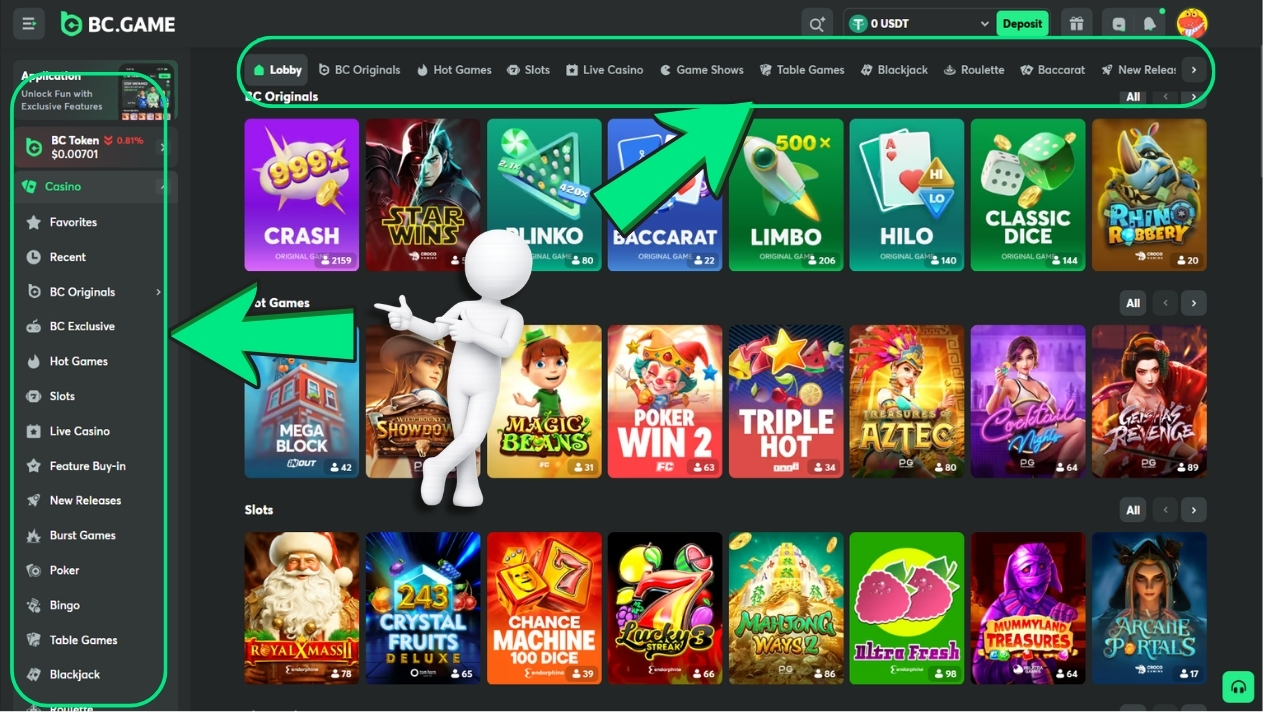
The platform’s graphical user interface is architecturally designed so that the primary sidebar functions as the central distribution node for all asynchronous database queries. An empirical observation of the Document Object Model reveals a strict semantic and information-technological separation of the offered entertainment modules, which are categorized solely according to the frontend’s visual rendering logic and the underlying calculation matrix. This methodical structuring is absolutely necessary to structure the enormous quantity of implemented smart contracts and API interfaces in a cognitively processable way for the user.
Visible and systemically indexed in the main navigation are typically the following dedicated categories: The “Slots” module aggregates the quantitatively largest number of RNG-based video slot machines from external developer studios. The “Live” section (or Live Casino) initiates high-resolution, bandwidth-intensive WebSocket video streams of real croupiers from dedicated studio infrastructures. The “Originals” category houses proprietary, in-house crypto algorithms whose deterministic random generation via cryptographic hash functions is mathematically verifiable directly on the blockchain. Under the nomenclature “Table Games,” purely software-based, RNG-driven simulations of classic table games can be found. For placing complex odds matrices on real and virtual sporting events, the dedicated sections “Sports” and “Esports” are available. This exact classification is of the highest analytical relevance for account management, as, for example, fulfilling rollover conditions for active promotions depends heavily on the chosen category; stakes in the bc gaming Originals section are often algorithmically included significantly less in the unlocking formula (Wager x 1% x 20%) than those in the regular video slot category.
Search and Shortcuts: Finding Slots Without Endless Scrolling
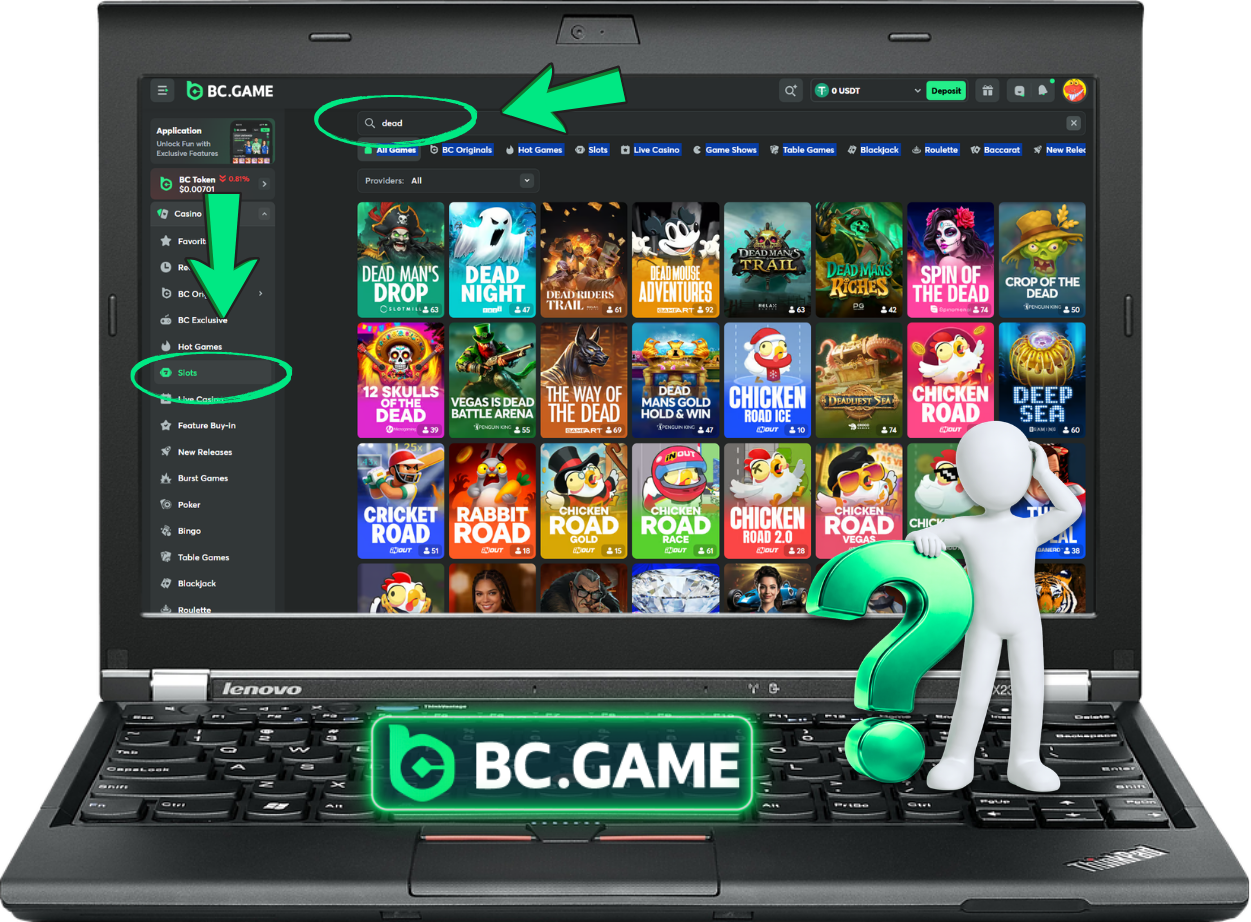
Managing the massive amounts of data within the relational game database of the bc games infrastructure requires highly efficient indexing and search algorithms, which must be made available to the end user via the user interface with zero latency. Targeted navigation through thousands of titles is primarily moderated by an asynchronous search bar, strategically positioned in the upper segment of the game lobby. Inputting specific alphanumeric strings into this input field initiates complex API requests in real-time, which search the indexed titles in the backend database and dynamically adjust the graphical matrix of game cards, entirely without forcing a complete, resource-intensive reload of the entire webpage.
As an alternative to direct text input, the system architecture enables accelerated orientation via predefined lists (collections) and filter tags, dynamically generated by the server. These systematic groupings aggregate games based on specific, backend-calculated metadata. A prominent example of this is sorting by current popularity (Hot or Popular), which is recalculated in real-time by the system based on globally accumulated transaction volumes. Chronological sorting by implementation date (New Releases) as well as a strictly alphabetical arrangement are also implemented. An information-technologically highly relevant filter for applied stochastics is the isolation of games with the metadata tag “Feature Buy.” Activating this shortcut forces the database query to output only those software scripts that explicitly allow the user, by paying a defined multiple of the base stake (usually 100 times), to bypass the base probability and trigger the potentially highly volatile free spins mode directly and without any lead time.
Test the Demo: How to Recognize if It’s Available
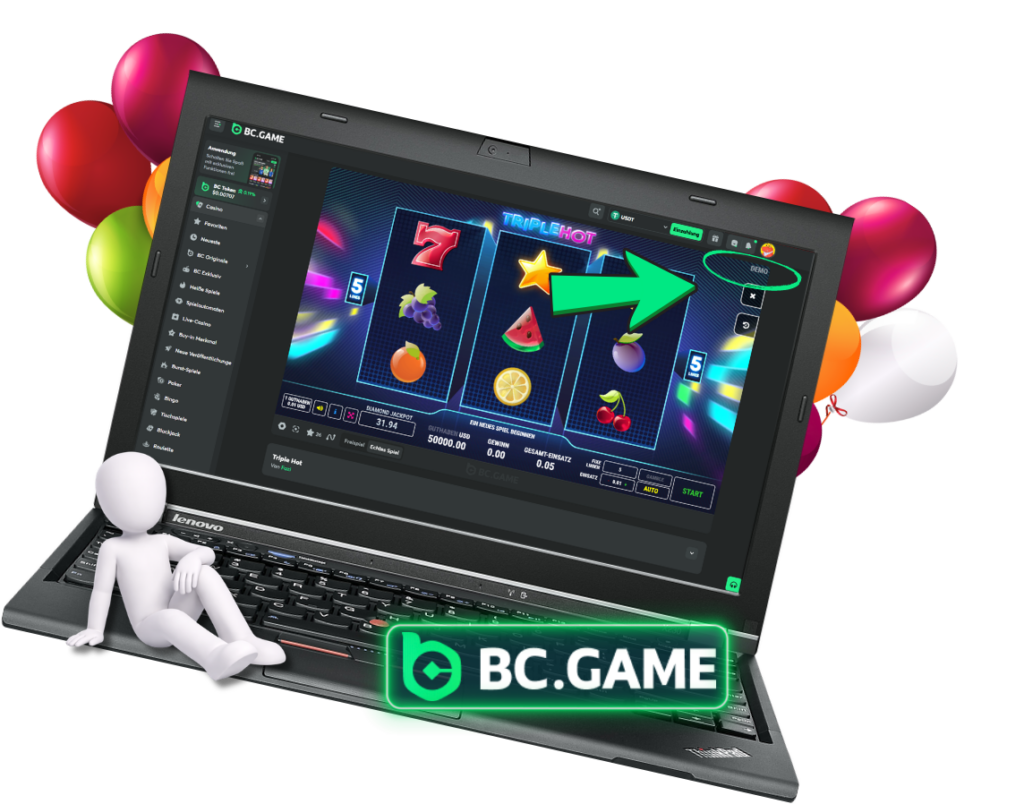
The implementation of a simulation mode, often referred to in the industry as Free Play or Demo Mode, represents an essential tool for the empirical analysis of specific stochastic probability distributions and volatility models, without requiring financial exposure or capital erosion for the user. In this isolated mode, the responsible server generates a fictitious account balance (Fun Money), with the underlying random number generator executing exactly the same deterministic calculations and symbol assignments as in the real money environment, to ensure a valid statistical evaluation of the algorithm.
However, it is an architectural and licensing reality that must be accepted: this demo mode is not universally available on the bc.game platform for all indexed database entries. The availability of this mode must be checked individually for each title, which is usually indicated by a secondary, visually distinct button on the information card of the respective game, appearing when the card is focused by the cursor.
This option is categorically absent for high-resolution live dealer streams for systemic reasons, as the continuous transmission of video data and the use of real server and personnel resources cannot be economically compensated for by fictional stakes. Similarly, certain external software providers often autonomously block demo access based on geographical IP assignment due to specific regulatory requirements for the targeted market. Even for in-house cryptographic applications, simulation may be temporarily prohibited to minimize server load from automated scripts or when access occurs via a specific bc game app whose local cache has temporarily not synchronized the demo interface with the API.
Providers in Bc Games: Only Mention What is Visible
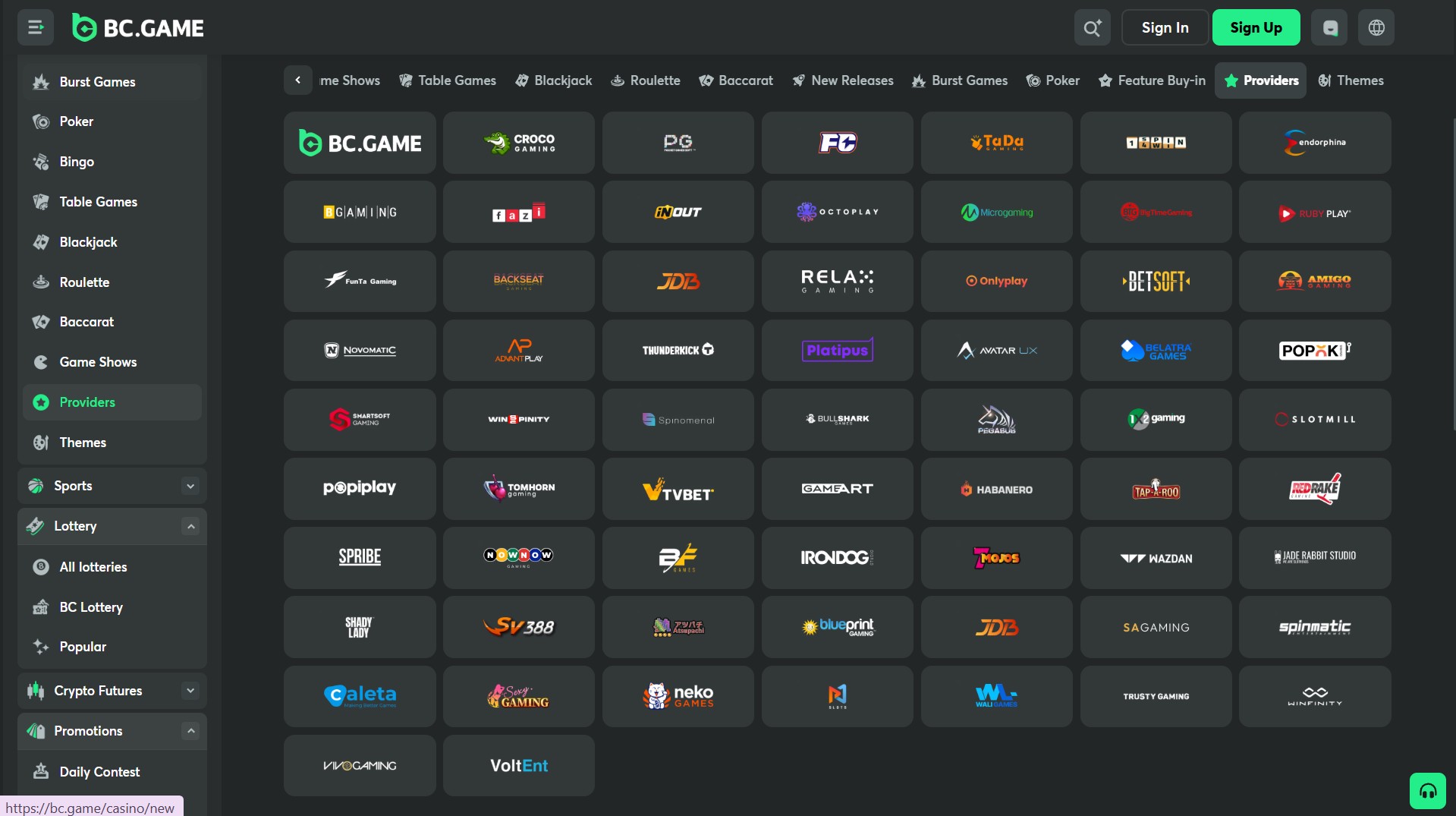
The origin, mathematical conception, and programming of the underlying software algorithms are of absolute priority for the scientific evaluation of volatility and algorithmic integrity. The decentralized platform does not host these highly complex RNG applications autonomously on its own data centers but seamlessly integrates them via asynchronous application programming interfaces of external, certified developer studios into the Document Object Model.
To isolate specific developer signatures, the user interface offers a dedicated filter, usually implemented as an interactive dropdown menu or as a horizontal, swipeable scroll element above the primary game matrix. Activating this filter reveals an alphabetically sorted list, supplied by the backend, of all software vendors currently integrated into the architecture. Visible and empirically verifiable in this menu are usually established industry leaders such as Pragmatic Play, Play’n GO, Hacksaw Gaming, Nolimit City, and Evolution. Consciously selecting a specific name from this provider list sends a modified parameter to the database, which rigorously restricts the visual output of game cards to the licensed products of that exact provider. This is an indispensable procedural prerequisite for the systematic investigation of specific mathematical models, such as those found in the calculation matrices of Nolimit City, known for extreme variances, or the classic grid mechanics of Pragmatic Play.
Top-5 from the Lobby Ranking
Continuous analysis of cumulative access statistics and transaction volumes within the server architecture reveals a statistically significant user preference for mathematically highly volatile algorithms equipped with cascading win systems and complex multiplier mechanics. The applications listed below exhibit the highest visibility and call rates in the lobby ranking at the time of this systematic review. However, from a methodological perspective, it is essential to point out that these popularity metrics are subject to constant algorithmic fluctuations, influenced by the arrival of new releases or the expiration of specific network promotions.
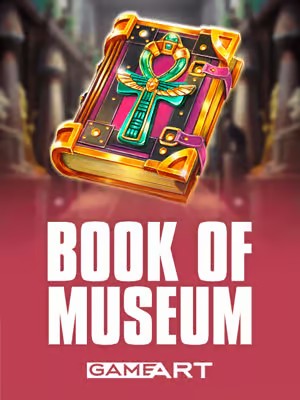
Book of Museum (GameArt): This 5-reel, 3-row, 10-payline Book slot stands out from the common genre standard with creative twists. Particularly noteworthy are the stacked Mystery Portal symbols, which align downwards and reveal a random winning symbol. Three or more Book symbols trigger the free spins, where the player can choose between immediate 8 free spins or the “Risk It” option – a gamble that offers up to 15 free spins with increased winning chances.
Spin of the Dead (Spinomenal): In this representative of the Book genre, the manufacturer relies on a classic reel setup with fixed paylines. The game principle follows the proven formula: The Book symbols act as both Wild and Scatter and trigger the free spins when a sufficient number appears. Once the bonus round starts, chance determines a symbol that, each time it appears, takes over the entire reel and awards wins independently of the paylines. With a balanced RTP, a wide betting range, and the successful combination of multipliers and free spins, the slot appeals to both newcomers and seasoned players in the market.


Sugar Splash (Octoplay): This colorful 5×6 slot with a confectionery aesthetic features a “Pay Anywhere” mechanic and cascading wins. The centerpiece is the Beach Ball with a multiplier between 2x and 100x, which can appear in both the base and bonus games. Four or more scatters trigger the free spins, while the Double Chance function increases the chance of triggering the bonus. With an RTP of 95.73%, a maximum win of 7,500 times the stake, and unknown variance, the slot impresses with simple yet feature-rich gameplay.
Sweet Saga (Caleta Gaming): This cluster-pays slot with a cute robot theme shines with huge Mega symbols and a cascade mechanic. Winning combinations disappear, making way for new symbols, allowing multiple wins per spin. The high variance is underpinned by a free spins feature with steadily increasing multipliers. With a solid RTP of 96.94% and a maximum win of 10,461 times the stake, the slot machine combines innovative approaches with a colorful design.


Rage of Olympus (Funky Games): A 6×5 slot that brings Greek mythology to life through an innovative avalanche mechanism. Winning combinations explode, making room for new symbols, enabling multiple wins per spin. The special feature is the combination of the “Pay Anywhere” mechanic and cascading reels, where scatter symbols play a central role. In the free spins feature, multipliers also ensure increased winning potential.
When Games are Missing: Causes Without Bypass Tips
In the quantitative analysis of server logs and client error messages, empirical evidence shows that the sudden absence of specific titles in the user interface or the failure of iframe initialization is very rarely due to fundamental architectural failures of the database clusters. The causes are usually based on defined system rules, network latency, or client-side misconfigurations in the user’s local browser.
The primary and statistically most frequent cause for missing games manifests in automated IP geolocation analysis. The servers of external providers check the origin of each incoming API request; if no valid licensing agreements exist for the addressed jurisdiction, the transmission of game data is restrictively blocked at the protocol level. At the local hardware level, overly restrictive ad blockers or privacy extensions in the browser may falsely classify legitimate WebSocket connections or RPC calls to the provider servers as malicious tracking attempts and prevent the execution of essential JavaScript libraries. Furthermore, asynchronous data states in the local browser cache can lead to outdated directory structures being loaded, which have simply not yet indexed newly implemented games. Insufficient bandwidth or packet loss in the TCP/IP network connection also often leads to timeouts when querying provider APIs, preventing the graphical representation cards in the bc.game casino from being rendered. It is the information technology standard to check these parameters locally, without resorting to unregulated proxy routings.
Bc.Game Esports and Bc Game CS2: Finding the Sections
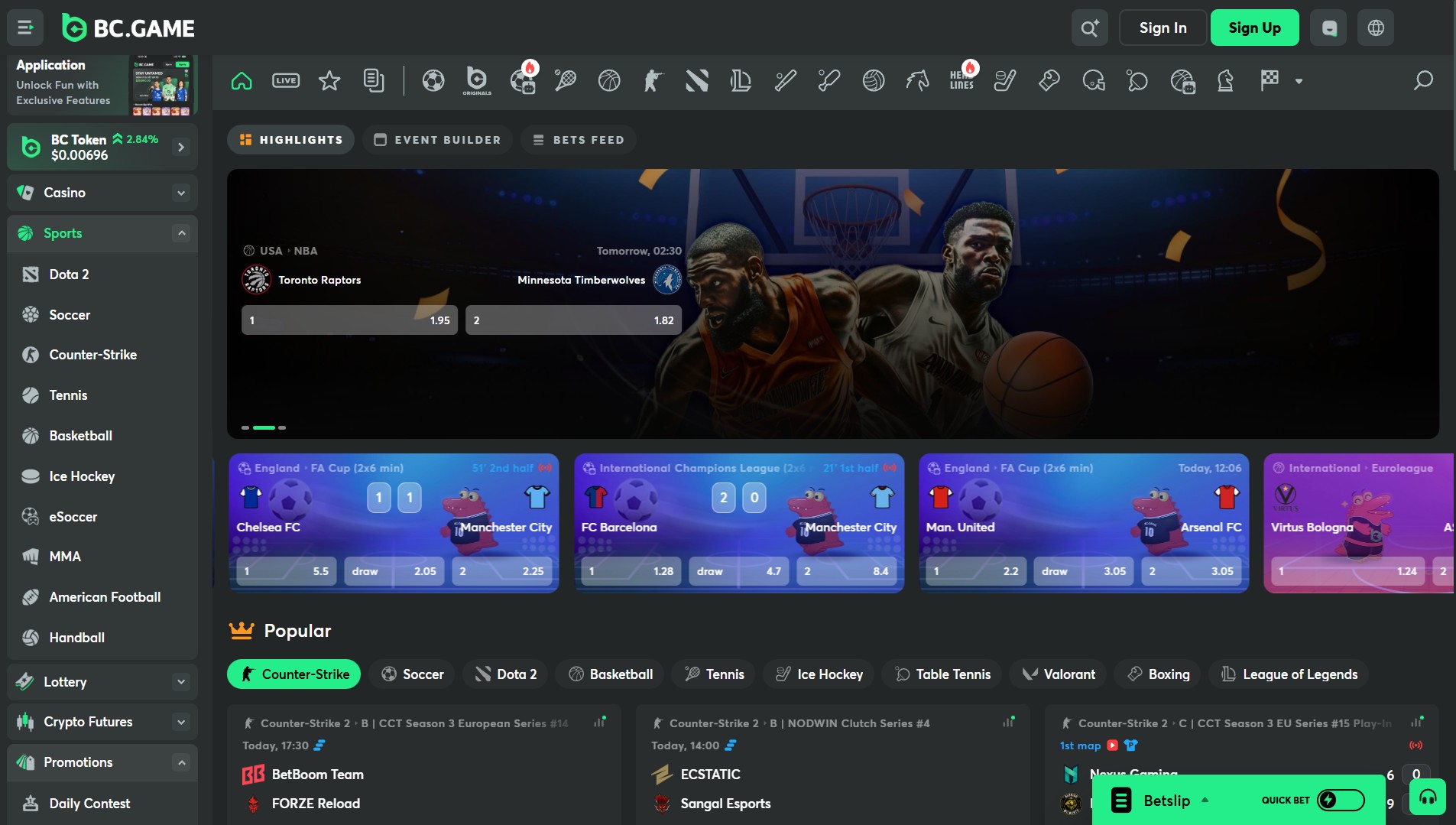
The provision of complex, dynamic odds matrices for competitive digital matches requires a completely separate database architecture and computational logic, which differs significantly in its structure and API endpoints from RNG-based slots. Targeted navigation to these highly specialized offerings necessitates consistently leaving the regular casino lobby and switching to the dedicated sports betting infrastructure.
In the primary, vertical sidebar, the specific “Sports” or explicitly “Esports” module must be accessed for this purpose, whereupon the client requests a new set of JavaScript modules from the server. After initializing this separate frontend for bc.game esports, the system presents a new visual hierarchy, listing the available disciplines and leagues. For systematic odds evaluation, the specific nomenclature of the sought-after software must be located within this submenu. Access to the dynamically updated betting markets for specific bc game cs2 tournaments is therefore achieved by directly selecting the corresponding entry in the alphabetical discipline list. Alternatively, directly typing the discipline into the integrated search bar of this specific sports module will also immediately lead to the graphical output of the corresponding betting markets, odds, and potentially available live streaming integrations.