

A rigorous study of the respective terms of service is absolutely necessary, as the system architecture controls the availability of these campaigns in a highly dynamic manner. The final activation in the user interface depends without exception on the specific configuration of the action, the verified status of the individual account, and the geographical IP assignment of the requesting network interface, whereby universal availability is systematically excluded.
Discover Promotions on Bc.Game: Where to Start
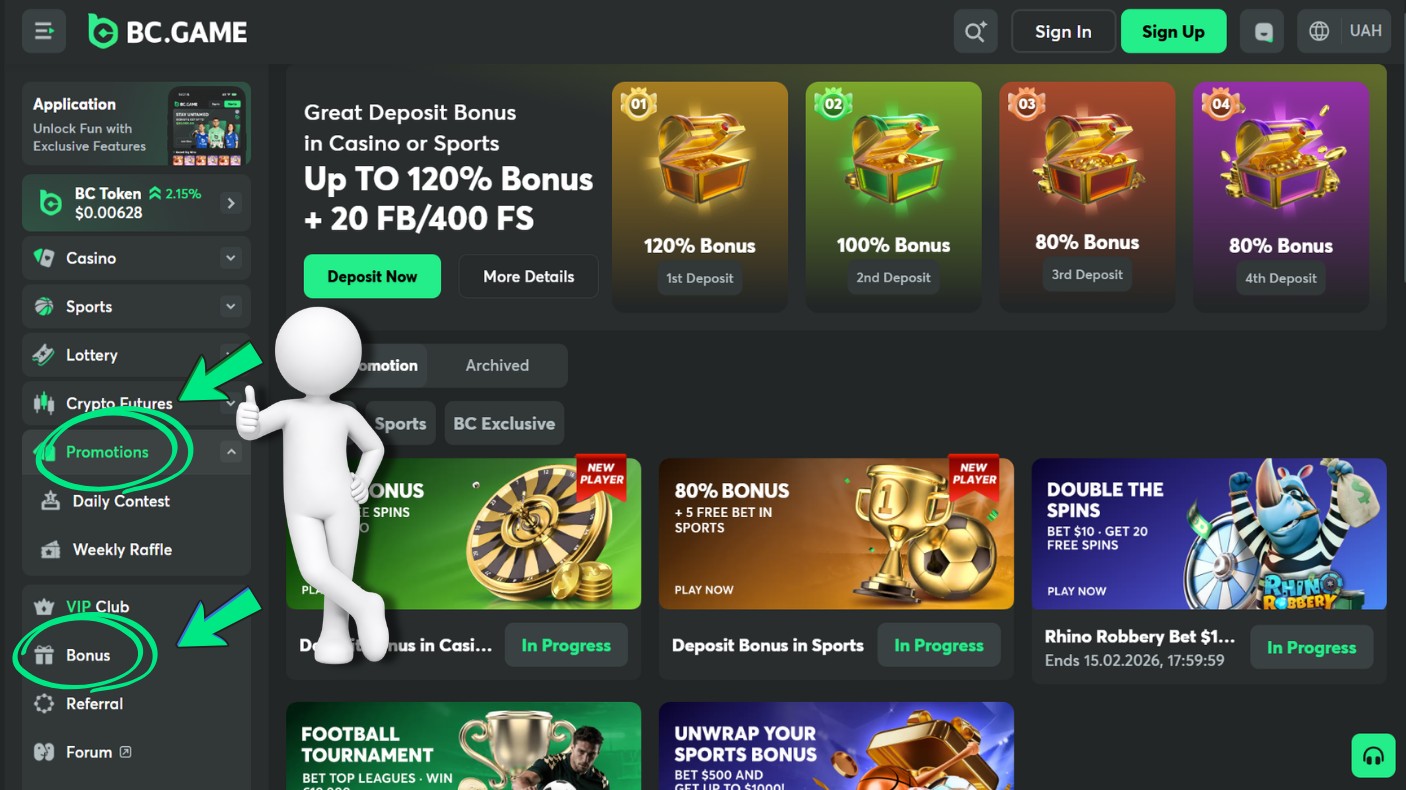
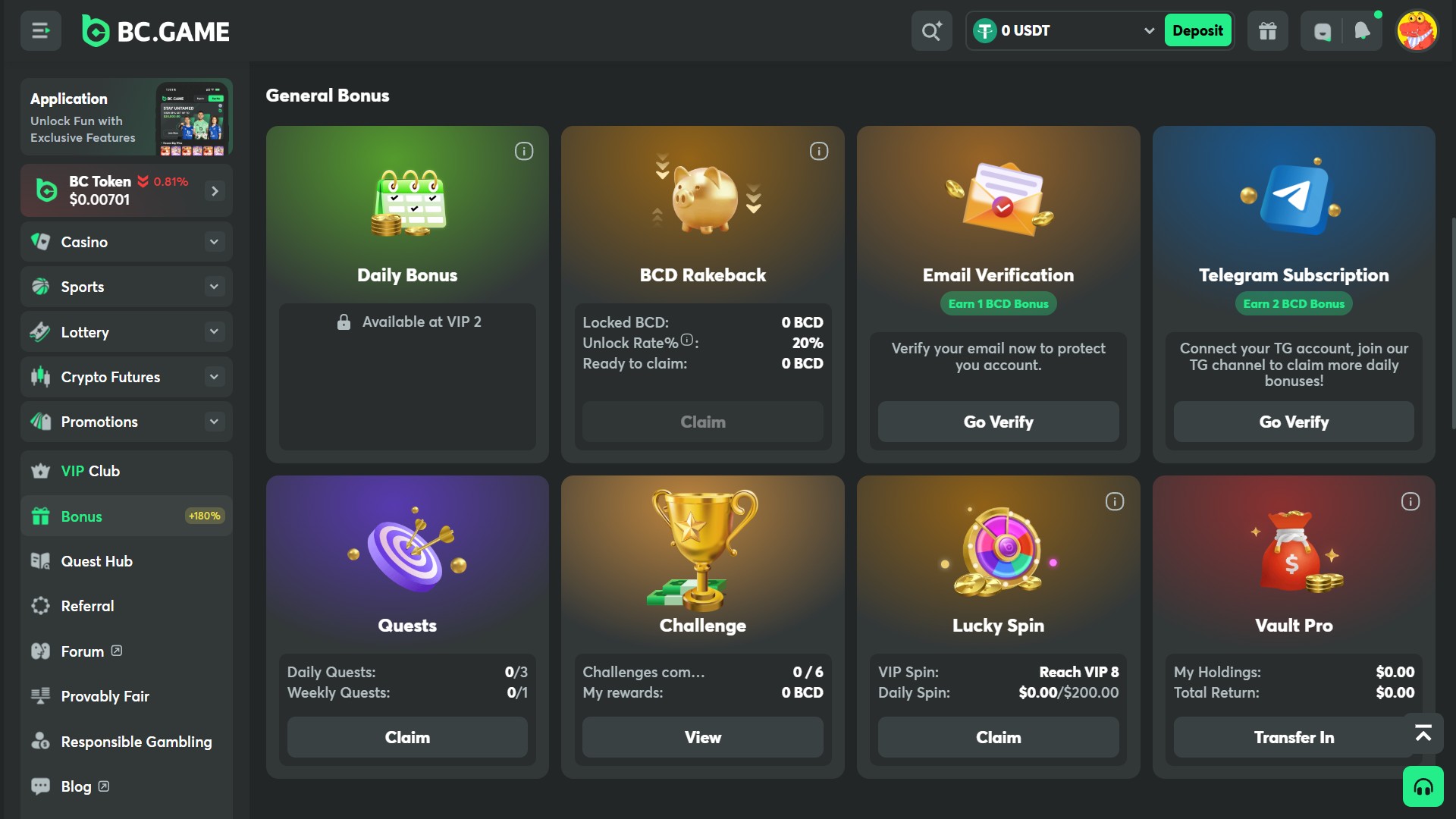
The systematic localization and evaluation of server-side bonus structures follows a strictly standardized navigation protocol, reflecting the complex client-server architecture of the user interface. The platform infrastructure developers centralize all active campaigns within a dynamically rendered module of the frontend, which transforms database queries into visually processed information blocks. The graphical user interface is designed to simplify the cognitive grasp of these sometimes highly complex smart contracts through methodical structuring, whereas the exact positioning of the menu elements varies depending on the end device used and screen resolution. Navigating to this information requires a sequential approach to ensure that no relevant procedural parameters are overlooked, which could determine the subsequent payout eligibility of potential winnings.
The algorithmic path to identifying the promotion terms includes the following mandatory steps:
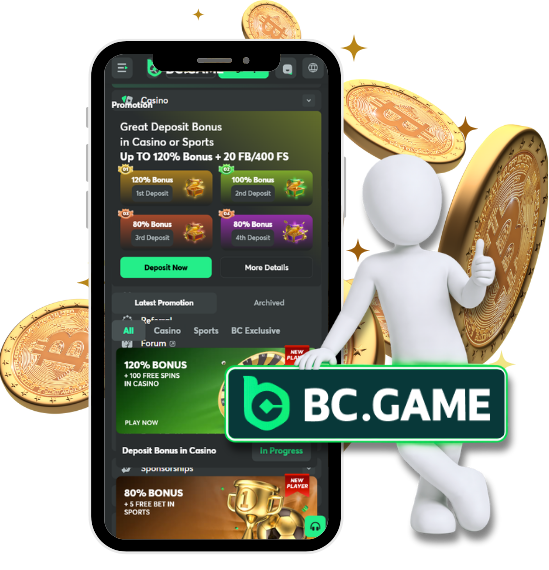
- Locate the main menu: In the standard desktop environment, the primary sidebar on the left edge of the screen must be targeted. For requests for the bc.game casino deutschland via mobile devices, the hamburger icon in the header or the static bottom bar usually needs to be activated.
- Access the dedicated module: Within the menu structure, the nomenclature “Promotions,” “Bonus,” or a semantically equivalent term must be identified and selected to trigger the asynchronous API call to the server database.
- Select the campaign card: The system then renders a visual matrix of interactive elements (cards), each representing a specific promotion; the relevant card must be focused by a click or touch event.
- Extract the metadata: In the opening modal overlay or on the dedicated subpage, the tabs “Terms,” “Details,” or “Rules” must be accessed to study the legal and mathematical restrictions in plain text.
This methodical approach is universally applicable, regardless of whether access occurs via a regular browser or following a verified bc game download. The synchronization of content across different platforms ensures that the displayed terms for the bc game no deposit bonus always reflect the current state of the relational database. Merely viewing the visual advertising banners does not provide reliable data for an empirical game-theoretic analysis, which is why accessing the detailed text documents represents the indispensable prerequisite for any further interaction with the platform’s smart contract.
Typical Bonus Formats in the Bc.Game Casino
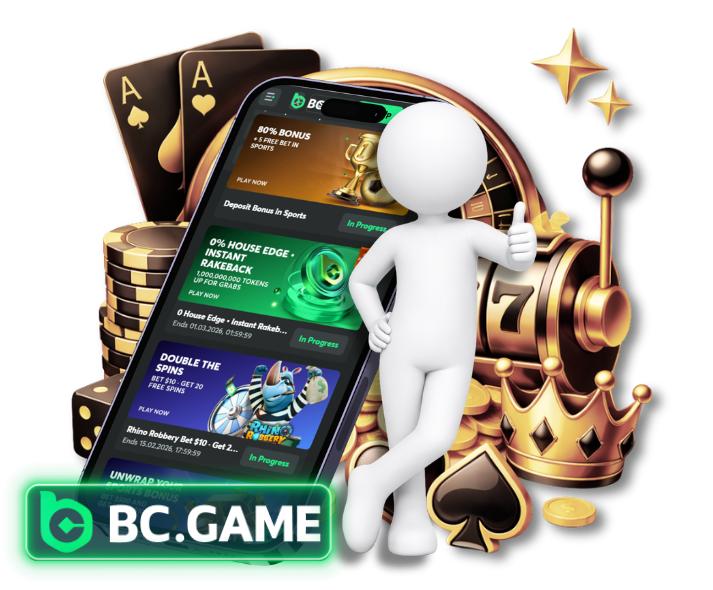
The taxonomy of algorithmic incentive systems at bc games is characterized by a multi-dimensional structure, whose specific modules can only be validated if they are actually rendered in the user interface (UI) for the respective account token. The platform architecture implements various categories of subsidies, which fundamentally differ in their calculation matrices and rollover conditions and target different phases of the user lifecycle. The transparency of these formats is dictated by the database, with the frontend merely visualizing the information released for the client’s current geographical and temporal parameter configuration.
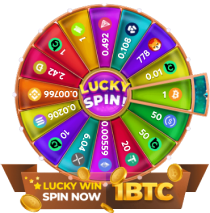
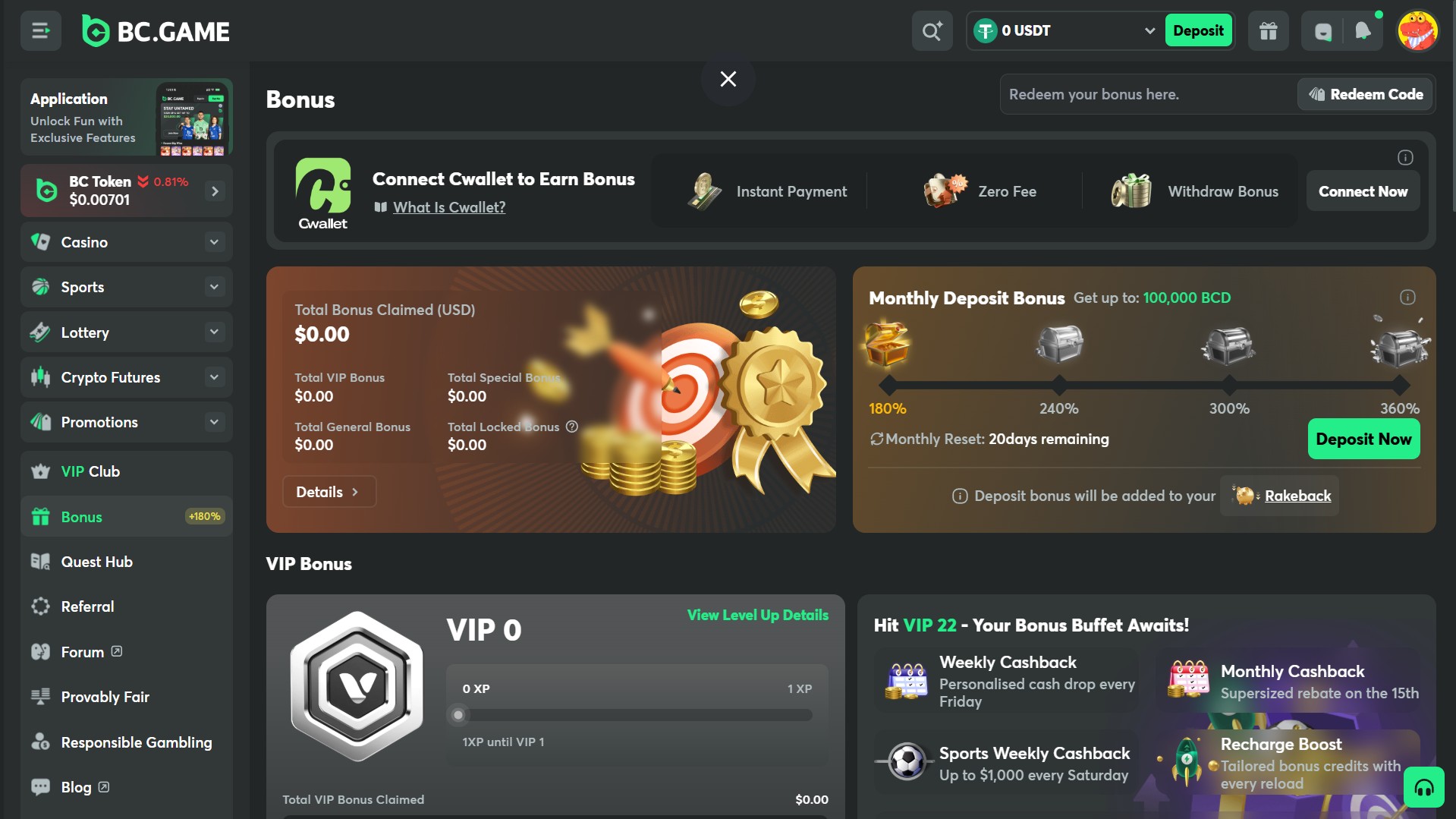
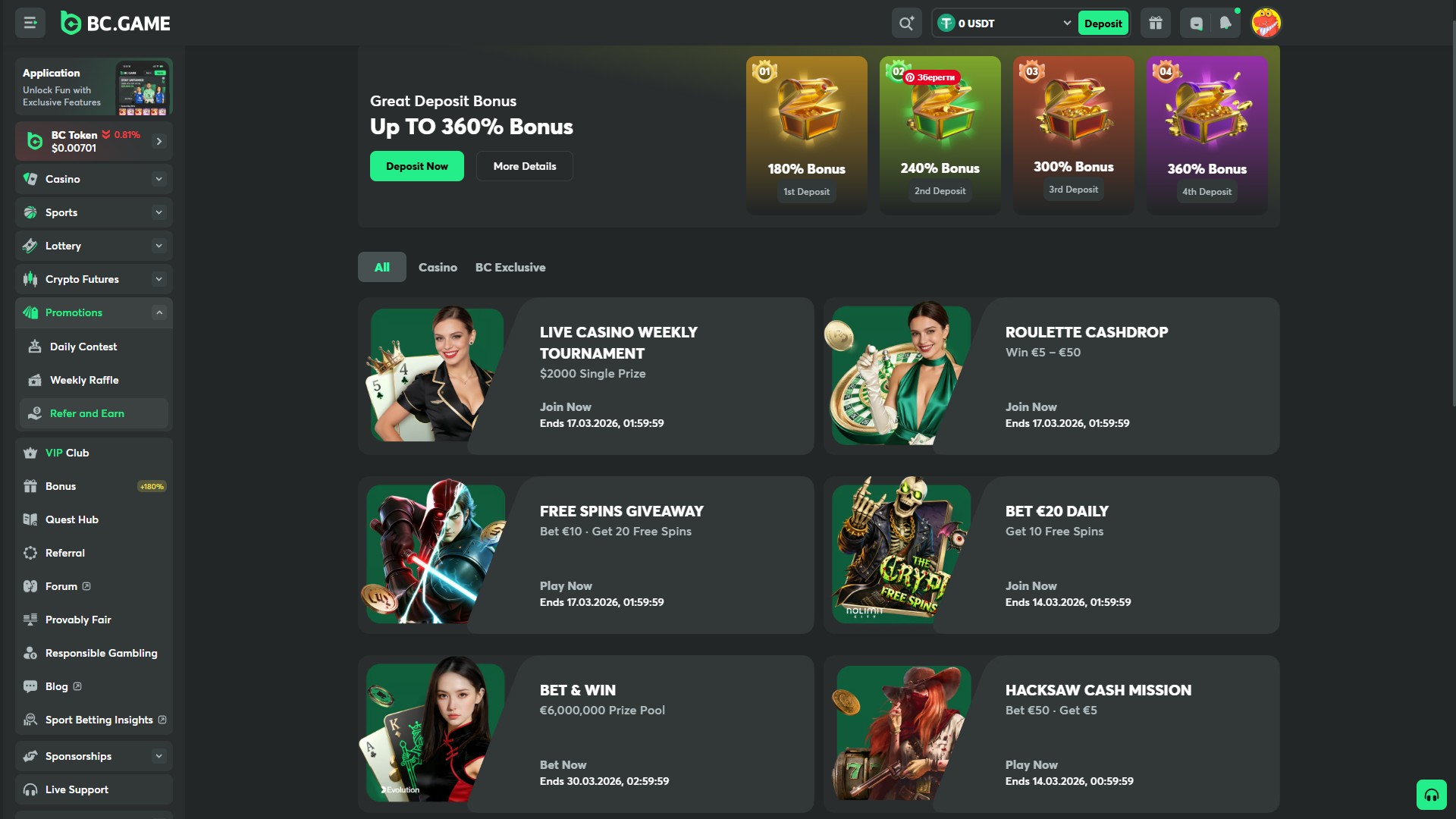
A structural core component, usually displayed in the UI immediately after registration, is the tiered welcome package (Welcome Bonus), which rewards the first four deposits with percentage allocations of 180%, 240%, 300%, and 360%, provided the minimum transfer volumes (starting at 10 USDT) are met. In the segment of no-deposit incentives, a daily mechanism often manifests in the form of free spins, such as the guaranteed spin on the ‘Lucky Spin’ wheel, whose random number generator (RNG) is programmed for an absolute mathematical payout potential of 5 BTC. Furthermore, the interface reveals, given the appropriate account history, complex VIP and level systems based on cumulative wagering, which generate proportional cashback rates (Rakeback) or time-controlled reloads (Recharge). Additionally, strictly time-limited events or specific missions (Task Hub) may be displayed as interactive widgets, rewarding the user with virtual tokens for achieving defined wagering volumes in specific categories, for example, when betting on particular bc.game esports tournaments. However, the actual existence and usability of these formats is always subordinate to the current display in the promotions matrix.
Terms First: What to Look For in the Fine Print
Before initiating active interaction to claim a promotion, the complex nature of the platform’s smart contracts requires a systematic analysis of the algorithmic restrictions. Uncritically accepting the parameters leads, in empirical system usage, to a statistically highly significant number of procedural conflicts and the potential loss of the subsidized added value, as the backend servers operate based on immutable database rules. Claiming a bc game no deposit bonus or a deposit-bound incentive binds the account token to a temporary contract, the termination or fulfillment of which is subject to precisely quantified stipulations. The architecture of the user interface often hides this highly critical metadata within text-heavy sections, which must be deconstructed before executing the API requests for activation.
Among the most elementary parameters to be evaluated within the Terms of Service is the basic eligibility, which defines whether the specific profile is qualified for the smart contract at all, based on its geographical IP assignment, VIP status, or verification level. Equally essential are the time limits; server-side timestamps define the exact Unix time value by which a bonus must be activated or the required rollover completed, before the algorithm irreversibly invalidates the allocated values. Another highly critical factor is the restriction of permissible applications: the weighting of stakes towards meeting wagering requirements is highly asymmetrical, meaning complex bets on competitive bc game cs2 tournaments or stakes on proprietary original algorithms (such as Dice or Crash) are often weighted with a drastically reduced factor, while certain slots (e.g., Book of Dead) may count 100%. Finally, the analytical review requires evaluating the rollover multipliers, which quantify the total stake required, as well as identifying any hard server-side maximum caps (Max Cashout), which algorithmically cap the maximum conversion of virtual tokens into real withdrawable cryptocurrencies, thus defining the real expected value of the bonus.
Distinguishing Between Bonus Funds and Real Money
The clear accounting separation of unencumbered capital resources and systematically subsidized values is a fundamental aspect of the relational database architecture, which manifests in the graphical user interface only when the frontend renders corresponding visual indicators and separate wallet sections for the user. If the UI of the bc.game casino visually displays this distinction through explicit markings, this representation is based on two strictly isolated ledgers within the backend infrastructure to prevent a mixing of calculation matrices. Cognitively grasping this separation is crucial to avoid miscalculations when placing bets or requesting withdrawals to external hardware wallets. Real capital, generated by the user’s own transfer from validated blockchain networks to assigned public addresses, is classified by the system as primary, completely unrestricted liquidity credit and is not subject to any algorithmic lock-up periods.
In contrast, there are virtual subsidies, which are recorded in the backend as conditional database entries and are usually marked in the frontend by specific token nomenclatures such as BCD. These locked values have no direct economic conversion value in their initial allocation phase and serve solely as algorithmic fuel for in-app usage within the platform’s defined parameters. The interface usually marks this credit with the status “Locked” and locates it in a specific dashboard element. The transformation of these locked tokens into real withdrawable capital requires the exact fulfillment of a mathematical unlocking formula, which in the case of BCD is fixed as $Wagering Amount \times 1\% \times 20\%$. Whether and under what precise parameters these unlocked BCD can be converted into other cryptocurrencies and withdrawn, or whether a specific bc game no deposit bonus has different withdrawal restrictions, is not a universal constant but is exclusively subject to the specific terms of the respective promotion, which must be consulted in case of discrepancies.
When the Bonus is Missing: A Safe Troubleshooting Procedure
In the quantitative analysis of interaction protocols and server logs, empirical evidence shows that the absence or incorrect visual display of an advertised promotion is very rarely due to architectural failures of the database clusters, but in the overwhelming majority of cases is based on unsatisfied system rules or client-side communication latencies. Error diagnosis requires a stringent, information-technological approach to identify the exact cause of the API call rejection or the suppressed rendering in the Document Object Model (DOM). An unstructured approach usually only leads to further asynchronous conflicts between the client browser and the bc gaming server architecture.
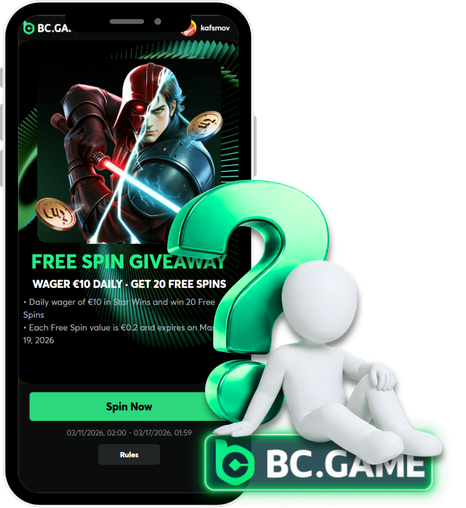
The standardized procedural sequence for troubleshooting includes the following systematic interventions:
- Evaluate the Terms: First, the specific terms and conditions of the promotion must be reviewed again to ensure that all binary system conditions, such as required minimum deposits, verified account levels, or geographical permissions, have been objectively and completely fulfilled.
- Identify Conflicts: It is necessary to check whether the server-side timestamp documents that the bonus was already activated in a previous session or whether the defined time limit (expiration date) has already been irrevocably exceeded.
- Clear the Cache: In the event of a potential UI malfunction (UI glitch), the webpage must be reloaded using a hard refresh, or the local browser cache cleared, to force the download of the most current JavaScript libraries and status updates from the server.
- Re-authenticate: A physical logout followed by a subsequent login generates a fresh asymmetrically encrypted session token, which often efficiently resolves synchronization issues between the client and the backend database.
- Consult the Infrastructure: If all these measures remain unsuccessful, communication with the support infrastructure (via live chat or email) should be initiated, whereby the exact transaction hashes or the specific nomenclature of the promotion must be provided for analytical review by the operators.